Products
Kémiai tulajdonságok optikai elemzése
Back to Products
Optikai elemzőrendszerek
Átfogó optikai elemzőrendszerek szilárd anyagokhoz, folyadékokhoz, iszapokhoz és gázokhoz
F
L
E
X
Egyszerű termékek
Könnyen kiválasztható, telepíthető és kezelhető
Műszaki kiválóság
Egyszerűség
Alaptermékek
Megbízható, robusztus és kevés karbantartást igényel
Műszaki kiválóság
Egyszerűség
Műszaki kiválóság
Egyszerűség
Speciális termékek
Nagy igénybevétellel járó alkalmazásokhoz tervezve
Műszaki kiválóság
Egyszerűség
FLEX választék
Műszaki kiválóság
Egyszerűség
Fundamental választék
Eleget tesz az Ön alapvető mérési igényeinek
Műszaki kiválóság
Egyszerűség
Lean választék
Könnyen kezeli az Ön alapvető folyamatait
Műszaki kiválóság
Egyszerűség
Extended választék
Innovatív technológiákkal optimalizálja az Ön folyamatait
Műszaki kiválóság
Egyszerűség
Xpert választék
Megoldás az Ön legnagyobb kihívást jelentő alkalmazásaihoz
Műszaki kiválóság
Egyszerűség
Összehasonlít
Measuring principle
TDLAS
Analyte and measurement ranges
H2S (Hydrogen sulfide):
Hazardous area approvals
ATEX / IECEx /UKEx Zone 1
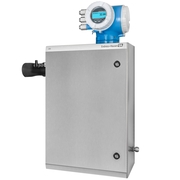
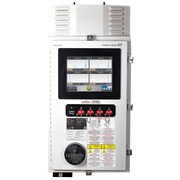
J22 TDLAS gas analyzer
Proven technology for accurate and reliable measurement of H2 O in natural gas, biomethane (RNG), carbon dioxide (CCUS), and hydrogen
Measuring principle
TDLAS
Measured variables
Concentration
Hazardous area approvals
ATEX / IECEx /UKEx Zone 1
Laser wavelength
Starter: 785 nm
Spectral coverage
Starter 785 nm: 300-3300 cm-1
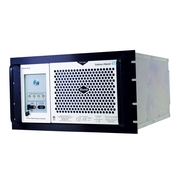
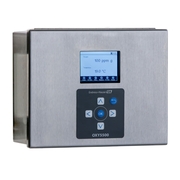
Raman Rxn4 analyzer
Rugged, reliable Raman analyzer ensuring 24/7 process and quality monitoring
Laser wavelength
Base model: 532 nm, 785 nm, 1000 nm
Spectral coverage
Base Model and Enclosure configuration
Spectral coverage
150-3425 cm-1 (532 nm)
Measuring principle
Quenched Fluorescence
Measured variables
Concentration
Hazardous area approvals
ATEX / IECEx - Zone 2
Measuring principle
TDLAS
Measured variables
Concentration
Hazardous area approvals
CSA Class I, Division 2
Measuring principle
TDLAS
Measured variables
Concentration
Hazardous area approvals
IECEx / ATEX / CNEx / KCs / CCOE / JPNEx Zone 1
Measuring principle
TDLAS
Measured variables
Concentration
Hazardous area approvals
KFOC1B Raman fiber-optic cable
New
Next-generation Raman fiber optics offering enhanced certifications and flexibility to support easier installations
Ambient temperature
Range:
Fiber optic cable
Length: 5000 mm / 196.86 inch (custom lengths available)
Segítségre van szüksége optikai elemzőrendszere kiválasztásában?
Segítünk Önnek a mérési feladataihoz és alkalmazásaihoz legmegfelelőbb termékek kiválasztásában és konfigurálásában.
Szilárd anyagok, folyadékok, iszapok, részecskék és gázok optikai elemzéséről
Az Endress+Hauser jelentős beruházásokat tett ügyfelei jövőjébe azáltal, hogy átfogó portfóliót kínál atomi és molekuláris elemzőeszközökből laboratóriumi, folyamat- és emissziómonitorozáshoz. Világelső optikai elemzőrendszereink segítenek ügyfeleinknek optimalizálni a kulcsfontosságú ipari folyamatokat, és megbízhatóbban, valós időben monitorozni a termékminőséget és a kibocsátást. A legfontosabb extrakciós és in situ technológiák közé tartozik a hangolható diódalézer abszorpciós spektroszkópia (TDLAS), a kioltott fluoreszcencia (QF), a Raman spektroszkópia, a közeli infravörös (NIR), az infravörös (IR), az UV/Vis és az atomabszorpció.
Folyamatok átláthatósága: Az optikai elemzésből származó adatok átláthatóságot biztosítanak a folyamatokban, lehetővé téve a magasabb szintű döntéshozatalt.Valós idejű mérés: A másodpercek vagy percek alatti mérések lehetővé teszik a felhasználók számára az állásidő minimalizálását és az ipari folyamatok működési költségeinek ellenőrzését. Minőség és megbízhatóság: Az optikai elemzőrendszerek segítenek az ügyfeleknek optimalizálni a kulcsfontosságú ipari folyamatokat és megbízhatóan ellenőrizni a termékminőséget.Nem invazív mérés: Az inline optikai elemzés biztonságos, hatékony és roncsolásmentes mérést tesz lehetővé minta-előkészítés vagy -kezelés nélkül.Magas üzemi rendelkezésre állás: A magas üzemi rendelkezésre állást könnyen kezelhető és karbantartható optikai rendszerek telepítésével érik el.Megfelelőség: A kibocsátások célzott minimalizálása érdekében megbízhatóan elemezni és ellenőrizni kell a gázkoncentrációkat.
What is optical analysis?
Optical analysis studies how light interacts with matter to identify and quantify chemical compositions. It involves examining the behavior of electromagnetic radiation—particularly in the ultraviolet, visible, and infrared regions of the spectrum—as it is absorbed, emitted, scattered, or transmitted by materials. This type of optical analysis is fundamental in fields such as spectroscopy, imaging, and microscopy, where understanding the properties of light and its interaction with matter reveals critical information about molecular structure, composition, and dynamics. To fully grasp how optical analysis works, it is important to understand the nature of electromagnetic radiation and how it interacts with matter.
What is electromagnetic radiation?
The electromagnetic spectrum represents the full range of all frequencies or wavelengths of electromagnetic radiation. Electromagnetic radiation is classified by wavelength into radio waves, microwaves, infrared, visible light, ultraviolet, X-rays, and gamma rays. Electromagnetic radiation can be expressed in terms of energy, wavelength, or frequency. The behavior of electromagnetic radiation depends on its wavelength. Electromagnetic radiation has both wave and particle properties. A charge at rest produces an electric field and a moving charge generates both electric and magnetic fields. Accelerated charges emit electromagnetic radiation.
How does electromagnetic radiation interact with matter?
The interaction of electromagnetic radiation with matter can involve absorption, emission, or scattering of radiation. The magnitude of interaction between electromagnetic radiation and matter depends on the size of the molecular dipole moment. Different regions of the light spectrum are used to understand various molecular or atomic properties.
What is spectroscopy?
Spectroscopy is the study of the interaction of electromagnetic radiation with matter involving absorption, emission, or scattering of radiation. It has been an essential tool for understanding atomic or molecular composition and structure.
What are spectroscopy techniques and/or measuring methods for chemical analysis?
Since 2012, Endress+Hauser has invested in technologies for inline or laboratory optical analysis, gas monitoring, and laboratory automation, including the acquisitions of SpectraSensors, Kaiser Optical Systems, Analytik Jena , and Blue Ocean Nova AG, as well as a strategic partnership with SICK AG . Within this expanded analysis portfolio, we offer a full range of spectroscopy tools. We use spectroscopy, an optical analysis technique, to understand atomic or molecular composition because of its specificity, ease-of-use, and ability to provide insight into a product or process. Spectroscopic techniques in chemical analysis use light to probe the composition, structure, or concentration of substances. Spectroscopy techniques provided by Endress+Hauser include:
Raman spectroscopy – Detects molecular vibrations by analyzing scattered laser light, useful for identifying chemical bonds and structures.Tunable diode laser absorption spectroscopy (TDLAS) – Uses laser light tuned to specific wavelengths to measure gas concentrations with high sensitivity.Quenched fluorescence (QF) – Measures light emitted by excited molecules; quenched fluorescence tracks changes in luminescence intensity and decay to detect analytes like oxygen. UV-Vis-NIR spectrophotometry – Measures reflectance, absorbance, and transmittance across ultraviolet, visible, and near-infrared wavelengths. Infrared (IR) spectroscopy – Analyzes absorption of IR light to identify functional groups and molecular structures. Atomic emission and absorption spectroscopy – Measures light emitted or absorbed by atoms to determine elemental composition. These optical analysis techniques rely on the interaction of electromagnetic radiation with matter, making them powerful tools for both qualitative and quantitative chemical analysis.
What is Raman spectroscopy?
Raman spectroscopy is a powerful molecular spectroscopy technique that analyzes the vibrational modes of compounds and provides molecular fingerprint identification of materials through spectral analysis. It typically uses visible or near-infrared laser light as the source of electromagnetic radiation. The method measures the inelastic scattering of photons, known as Raman scattering, which occurs when light interacts with molecular vibrations. Unlike absorption-based techniques, Raman spectroscopy is based on scattering of light and does not require a defined path length. It is sensitive to changes in the polarizability of the electron cloud during light interaction, making it ideal for measuring symmetric bond vibrations. Like other molecular spectroscopy techniques, Raman spectroscopy is used to identify chemical composition and molecular structure. However, it offers important advantages, including its high specificity and ability to measure in aqueous samples. An aspect of Raman spectroscopy that is advantageous in a process setting is its ability to scale a quantitative analytical model from R&D to manufacturing with minimal scale-specific data.
What is ultraviolet-visible spectroscopy (UV/Vis)?
UV/Vis is an analytical technique that measures the absorption of ultraviolet and visible light by a substance. It operates within the wavelength range of approximately 200–800 nm and is commonly used to determine concentration, chemical structure, and purity of samples. UV/Vis analysis is widely applied in pharmaceuticals, environmental testing, and chemical research for fast, reliable results.
What is near infrared (NIR)?
Near-infrared (NIR) refers to the region of the electromagnetic spectrum with wavelengths ranging from approximately 780 nm to 2500 nm. NIR spectroscopy is widely used in optical analysis to identify chemical compositions, monitor material properties, and perform non-destructive testing. It is especially valuable in industries like hydrocarbon processing, pharmaceuticals, agriculture, and food processing for rapid, accurate analysis without sample preparation.
What is absorption spectroscopy?
Absorption spectroscopy measures the absorption of specific wavelengths of electromagnetic radiation by atoms or molecules in a sample. Absorption occurs due to the selective removal of certain frequencies by matter, revealing valuable information about the sample’s composition and concentration.
What is tunable diode laser absorption spectroscopy (TDLAS)?
TDLAS is a form of infrared spectroscopy that analyzes absorption related to changes in dipole moments of molecules during vibrational transitions. It uses infrared or near-infrared laser light tuned to a gas’s unique absorption lines to measure the concentration of specific analytes with high precision. The technique is governed by the Beer-Lambert Law , which relate the amount of light absorbed to the properties of the absorbing material. By applying Beer-Lambert Law, TDLAS quantifies how much light is absorbed at specific wavelengths, enabling accurate measurement of trace gases.
What is quenched fluorescence (QF)?
QF, also known as fluorescence quenching, is an optical technique that measures how the fluorescence of a molecule is reduced or "quenched” by oxygen. Fluorescence refers to the luminescence of light by an excited molecule almost immediately after it absorbs light. This method typically uses ultraviolet (UV) or visible light as the source of electromagnetic radiation. The technique involves the excitation and emission of light by fluorescent molecules, and the degree of quenching provides valuable information about the presence or concentration of specific analytes, such as oxygen.
Több megjelenítése
Kevesebb megjelenítése
Letöltések
Fedezzen fel további információforrásokat
Raman spectroscopic analyzers
Raman spectroscopic analyzers - Robust optical measurement of chemical composition
Letöltés
TDLAS and QF analyzers technology guide
TDLAS and QF analyzers technology guide - Principle of operation, configurations, and certification information
Letöltés
Emission monitoring solutions
PDF, 4.9 MB
A comprehensive portfolio for continuous emission monitoring. With future-orientated solutions tailored to the respective measuring task in your industry.
Letöltés
Scattered light and transmission dust measuring devices
PDF, 4.8 MB
Comprehensive portfolio of dust and particle measuring devices
Letöltés
Kapcsolódó tartalom
Hírek, események és még sok más...
Quality & Compliance
Boost plant safety, ensure product quality, and optimize operations. Raman spectroscopy measures the composition and molecular structure of your samples from lab-to-process in real time.
Termékek
Reliable H2 S measurement to improve gas quality, process control, and asset integrity in the Oil & Gas industry.
Kapcsolódó témák
Optimize plant safety and availability. Tunable diode laser absorption spectroscopy (TDLAS) rapidly and reliably measures concentrations in process gas streams in real time.
Az adatvédelem nagyon fontos számunkra
Sütiket használunk a böngészési élmény javítására, statisztikai adatok gyűjtésére a webhely működésének optimalizálása érdekében, valamint személyre szabott hirdetések vagy tartalmak közvetítésére.
Ha az „Összes elfogadása” lehetőségre kattint, Ön hozzájárul a sütik használatához.sütikre (cookie) vonatkozó irányelveinket .
Testreszabás
Csak az alapvetőek elfogadása
Összes elfogadása